
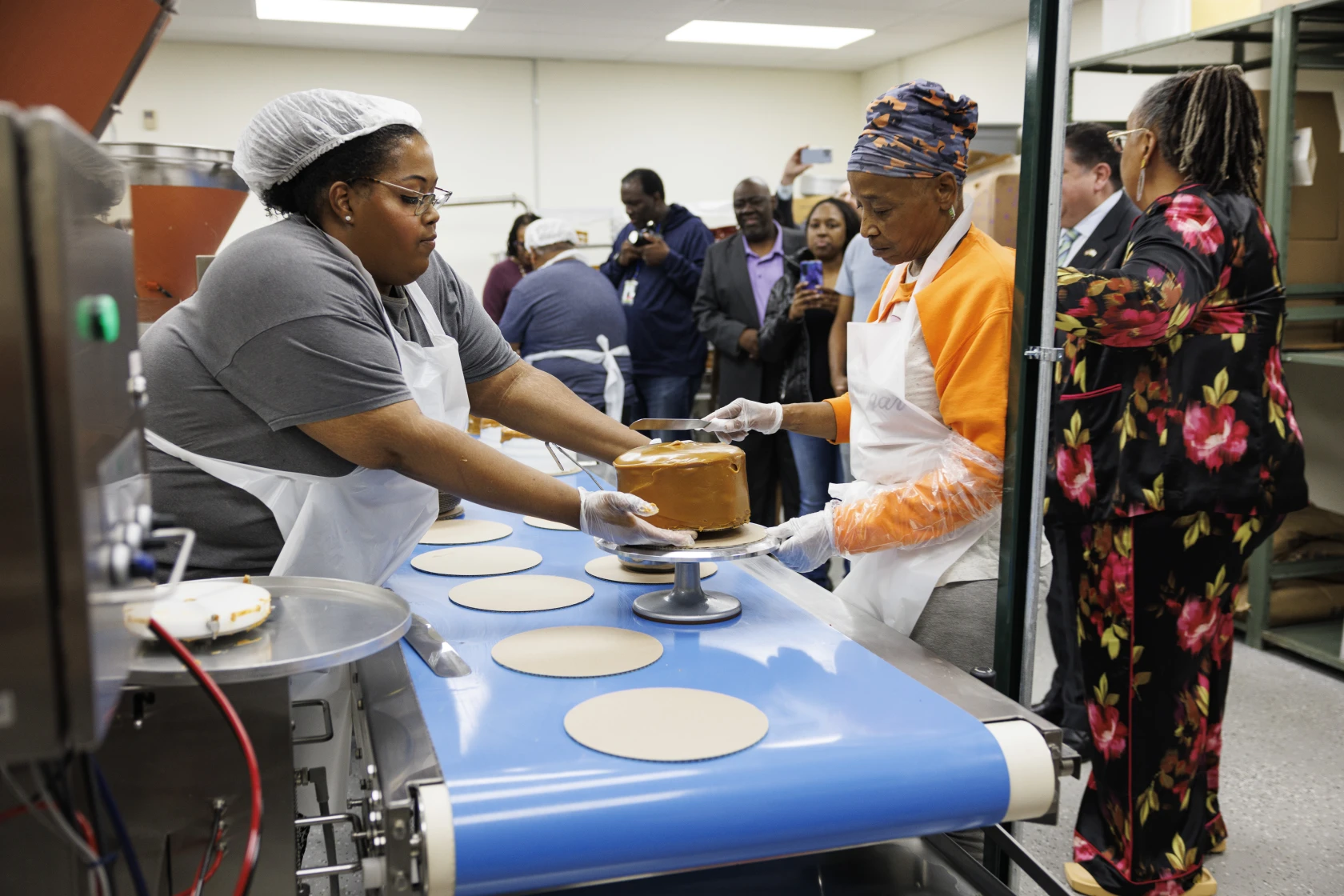


Presidential Candidates Donald Trump and Kamala Harris Vow to Revive Manufacturing, But Overlook Black Americans in Rust Belt States.
With the 2024 presidential race heating up, both Donald Trump and Kamala Harris have turned their focus to reviving the U.S. manufacturing sector—a crucial issue in key battleground states like Pennsylvania, Michigan, and Ohio. Their proposals, which aim to bring back lost jobs and boost local economies, are primarily targeting the predominantly white, working-class voters in the Rust Belt. However, a significant demographic has been largely overlooked in these discussions: Black Americans.
Despite being disproportionately affected by the decline in manufacturing jobs over the past few decades, Black Americans have been left out of the candidates’ narratives. During its peak in the mid-20th century, the manufacturing industry provided stable, middle-class jobs for many Black families in cities like Detroit, Chicago, and Cleveland. The sector’s collapse led to a wave of economic instability that still impacts Black communities today.
“Reviving manufacturing is not just about the economy; it’s about creating equitable opportunities,” said Andre Perry, a senior fellow at the Brookings Institution. “Black Americans were pushed out of these jobs during the downturn, and they should be at the center of any revival efforts.”
The Economic Impact
The Rust Belt region, where the manufacturing decline hit the hardest, still struggles with high unemployment rates and declining population in historically Black neighborhoods. In cities like Flint, Michigan, and Gary, Indiana, a revitalization of the manufacturing sector could play a pivotal role in rebuilding communities that have suffered from decades of disinvestment.
The candidates’ current plans emphasize large-scale investments, tax incentives, and bringing production back from overseas. Yet, these proposals lack a specific focus on including Black workers, many of whom have experienced systemic barriers to employment in manufacturing, such as discrimination and limited access to training.
A Missed Opportunity?
By not explicitly addressing these disparities, Trump and Harris risk alienating a key voting bloc. Recent polls show Black Americans in the Rust Belt are eager for meaningful economic change, making their concerns crucial in states that could decide the election.
Without a clear commitment to ensuring Black communities benefit from any manufacturing revival, both candidates may find themselves missing the mark in their appeals to Rust Belt voters.