
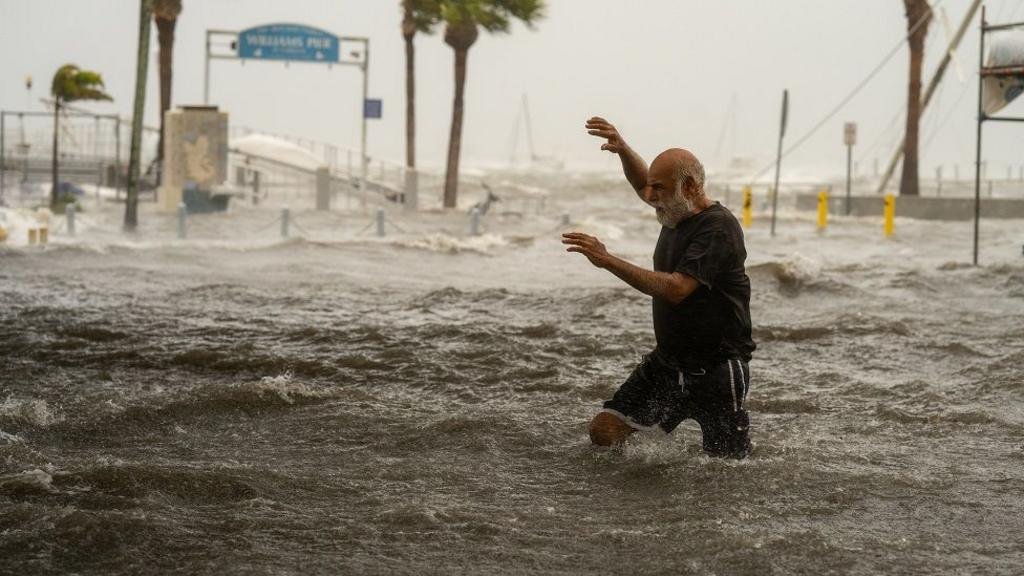


Perry, Florida — Hurricane Helene made landfall along Florida’s Big Bend region, wreaking havoc with strong winds and storm surges that left widespread damage. At least three people are confirmed dead, and over 2 million are without power across Florida and Georgia, as residents grapple with the aftermath of one of the most destructive storms of the year.
Landfall and Initial Impact in Perry, Florida
Perry, a small town in northern Florida, took the brunt of Helene’s 150 mph winds, resulting in catastrophic damage to homes and infrastructure. Roads leading to the area were flooded, making evacuation difficult, while the surrounding communities of Steinhatchee and Cedar Key also reported significant storm surges and damage.
Duke Energy and Georgia Power have reported widespread outages. The Duke Energy Outage Map shows much of the region is still in the dark, and the Georgia Power Outage Map indicates that hundreds of thousands in Georgia are experiencing similar challenges.
High Wind Warnings Continue as Storm Heads North
The National Weather Service has issued continued high wind warnings for Georgia as Hurricane Helene moves inland. Atlanta and Valdosta are under threat from damaging winds and potential tornadoes. Heavy rain and strong gusts are still being felt across the region.
Helene’s storm surge also threatened infrastructure along the coast, including the Howard Frankland Bridge connecting Tampa and St. Petersburg, though the bridge remains open.
Power Outages Across the Region
As the storm moved north, both Florida and Georgia saw massive power disruptions. According to Duke Energy, over 1 million people are without power in Florida, including in major cities such as Tallahassee and Panama City. In Georgia, an additional 1 million residents are dealing with blackouts, as Georgia Power crews work around the clock to restore services.
The JEA Outage Map in Jacksonville is also showing widespread power issues, while outages are reported as far north as Savannah, Georgia. As of Thursday, there is no estimated time for full restoration of power.
Hurricane Helene’s Path and What’s Next
Meteorologists are closely tracking Helene’s path as it moves deeper into Georgia. The storm’s initial landfall in Florida caused massive flooding and damage across coastal areas, but now the threat extends into northern states. Atlanta is preparing for heavy rain and strong winds, with potential flooding along the Savannah River.
Reports from the Panama City Beach Live Cam and Clearwater Beach Cam showed dramatic images of storm surges crashing into coastal areas. The high winds and surges have caused significant flooding, leading to several emergency rescues in coastal towns.
Ongoing Relief Efforts
Governor Ron DeSantis declared a state of emergency, urging residents to stay indoors and follow safety advisories. The National Guard has been deployed to assist with rescue efforts and provide aid in the hardest-hit areas. The state is also working with federal agencies to provide financial support and resources to rebuild in the aftermath of the storm.
Where Helene Made Landfall
Hurricane Helene made landfall near Keaton Beach, Florida, early Wednesday morning, with sustained winds just shy of a Category 5 hurricane. By Thursday morning, the storm had passed into Georgia, leaving behind a path of destruction that will take months to repair.
As relief efforts ramp up, the focus remains on providing shelter and services to those affected by power outages, flooding, and the storm’s devastating winds.
Stay tuned for more live updates as Hurricane Helene continues its course through the Southeast.